 Nepali Icons
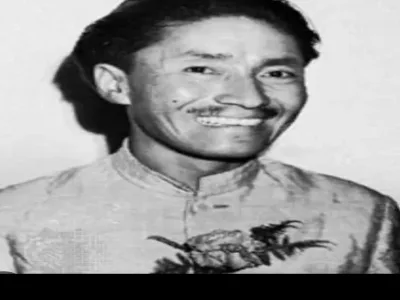
Bhupi Sherchan: The People's Poet of Nepal
Early Life in Mustang
Bhupi Sherchan was born on January 28, 1936, in Tukche, a village in the Mustang district of Nepal. Born into a Thakali merchant family, he grew up in the culturally rich Kali Gandaki Valley, where trade caravans from Tibet brought diverse ideas and perspectives. His early environment — a meeting point of Tibetan, Indian, and Nepali cultures — shaped the multicultural consciousness that would define his poetry.
He studied in Benares (Varanasi), India, where he was exposed to Hindi literature and progressive political thought. He became deeply influenced by socialist ideals and the struggle for democratic rights in Nepal during the Panchayat era.
Political Activism and Literary Awakening
Sherchan became involved in political movements against Nepal's autocratic Panchayat system. His poetry was never disconnected from the political reality of his time; he wrote with the conviction that literature must be in service of the people. He worked as a journalist, translator, and editor, using every platform available to advocate for democracy and social justice.
His Most Famous Works
Sherchan's most celebrated poem is "Ghumne Mech Mathi Andho Manchhe" (A Blind Man on a Rocking Chair), a complex meditation on identity, confusion, and the human condition. His collection "Ghumne Mech Mathi Andho Manchhe" (1969) is considered a landmark in Nepali poetry. Other celebrated poems include "Mero Priya Manche" (My Beloved Person) and works about the beauty of the Himalayan landscape and the dignity of ordinary Nepali life.
Recognition and Legacy
Sherchan received the Tribhuvan Pragya Puraskar (award) in 1976 and the Jagadamba Shree Puraskar in 1985. After the restoration of democracy in 1990, his works gained even wider recognition as a literary record of resistance against oppression.
Bhupi Sherchan died on August 7, 1989, in Kathmandu. He is buried in Pashupatinath's Arya Ghat, a site reserved for Nepal's most revered citizens. His poems are required reading in Nepali school curricula and his birthday is celebrated as Nepali Poetry Day by literary circles. He remains the most beloved modern poet in Nepali language.

Related Biographies
Comments (0)
No comments yet. Be the first to share your thoughts!